

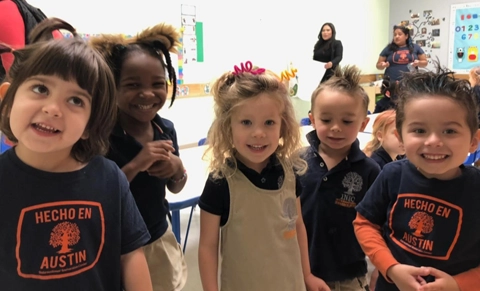
Social-Emotional Learning Preschool in Austin, TX: Skills for Life, Starting Now

Daily practice in empathy, self-regulation, and problem-solving within calm, language-rich classrooms.

SEL That Sticks: What Sets INIC Apart

Language-rich classrooms, calm routines, and consistent teacher modeling turn practice into daily habits

In our social-emotional learning preschool in Austin, TX, children follow a social skills curriculum for preschoolers that teaches naming feelings, sharing, and problem-solving. Songs, stories, and role-play make new language concrete, warm, and age-appropriate.
  • Spanish all day with simple SEL language children can use anywhere
  • Short, playful self-regulation activities during transitions and centers
  • Clear visuals and routines that make expectations predictable and fair
  • Small groups for coaching turn-taking, problem-solving, and kindness
  • Teachers with CPR/First Aid and 72+ hours of paid PD each year
  • Family transparency with WatchMeGrow and Procare updates that align home and school

Emotional Intelligence Goals

At INIC, students learn to identify, understand, and manage their emotions in healthy, productive ways. Our program helps children develop emotional awareness and self-regulation, which are key to behavioral growth.
Emotional Intelligence Goals

Social Intelligence Goals

INIC students also focus on building social intelligence, learning to understand themselves and others. Through guided activities, children identify their place and responsibilities in the world, learning important social skills such as cooperation, empathy, and respect.
Social Intelligence Goals

INIC’S APPROACH TO SOCIAL-EMOTIONAL LEARNING

How Social Emotional Learning Happens

our Methods

Positive Discipline

Discipline is often associated with punishment, but not at INIC. When students make mistakes, misbehave, or experience intense emotions, we see it as a learning opportunity. Our focus is on teaching self-regulation and emotional understanding, guiding children through their feelings and actions.

INIC emphasizes a growth mindset that removes shame and punishment from traditional discipline. We focus on praising good behavior, teaching morals, and helping kids feel invested in their classroom community. This approach fosters a supportive, respectful environment where children learn from their experiences.

Praise

At INIC, students are consistently praised for demonstrating good behavior. Positive reinforcement builds self-esteem, encourages a sense of accomplishment, and creates a lasting pattern of good behavior. When children feel valued for their efforts, they develop a strong sense of responsibility and confidence in their actions.

Logical Consequences

INIC teaches children the connection between their behavior and its outcomes. By helping them understand cause-and-effect, children learn responsibility, self-discipline, and problem-solving skills. Logical consequences empower students to make better choices and develop critical thinking skills in a supportive, structured environment.

our classrooms

Classroom Agreements

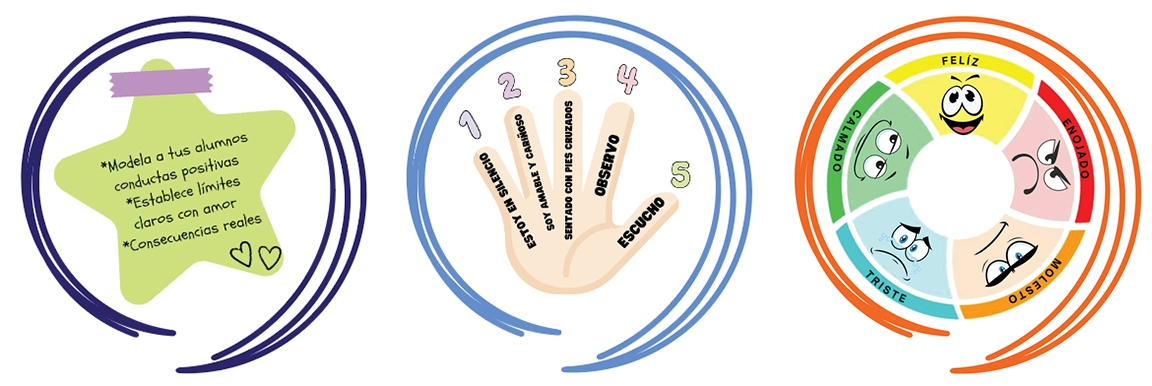
At INIC, every child is involved in maintaining a positive classroom community. This includes practicing “Give Me Five” agreements, where children affirm values such as:

“I am quiet.”
“I am kind and loving.”
“I sit with crossed feet.”
“I am observant.”
“I listen.”

These agreements teach responsibility, consideration for others, and the importance of self-care. By practicing these affirmations, children understand how to contribute positively to their classroom environment.

Emotion Wheel

Children use the “Emotion Wheel,” a tool that displays emotions and their corresponding facial expressions. This helps them recognize, identify, and healthily express their emotions. The Emotion Wheel empowers students to manage and communicate their feelings appropriately, fostering emotional intelligence.

Safe Places

Every classroom at INIC has a “safe place” where children can reflect on their emotions at their own pace. These safe places provide a familiar and calming environment for kids to process their feelings and regain composure when needed. This space is integral to creating an emotionally supportive classroom.

our culture

Morals

At INIC, morals form the foundation for understanding right from wrong, fairness, empathy, compassion, and social skills. We guide children to express their morals through prosocial behaviors such as sharing, helping, and comforting others.

INIC students learn positive ways to navigate complex relationships and build a strong ethical foundation for their future.

Helper of the Day Program

Children actively contribute to their classroom community by taking on the role of “Helper of the Day.” This responsibility encourages children to support their peers, reinforce positive behaviors, and create a nurturing environment. It also teaches leadership skills as children take on the task of guiding their classmates with kindness and responsibility.

Diversity & Inclusion

INIC explores multicultural traditions, customs, and celebrations as part of our curriculum. By understanding culture at a young age, children develop empathy, respect, and a broader worldview, leading them to embrace diversity and inclusivity in the classroom and beyond.
Social Readiness
Social Readiness

Purposeful Play Impacts Social-emotional Learning

NIC infuses Purposeful Play, every day, in structured group and individual activities. This includes exploration, sports, games, and imagination activities. Organized play at INIC is a tool for teaching teamwork, sharing, friendship, communication, and modeling positive behavior.
Check Icon

Social Cognition

The understanding of one's own and others' mental states begins early, preceding language acquisition. It then progresses through infancy and preschool. Positive social cognition fosters healthy relationships.

Check Icon

Impact on Social & Academic Success

Strong socio-cognitive skills lead to improved communication, social competence, peer relations, academic success, and overall well-being. Conversely, weak social cognition can hinder school transitions and lead to behavioral challenges.

Check Icon

Promotion of Positive Behaviors

Encouraging positive interactions not only boosts social cognition but also reduces the likelihood of antisocial behaviors. This promotes healthy relationships and social interactions.

Check Icon

Family Influence

Parents are encouraged to play with kids at home, too. Positive family dynamics, such as secure attachment and supportive parenting, are crucial for nurturing socio-cognitive skills. Family activities, like joint pretend play and story reading, enhance children's perspective-taking abilities.
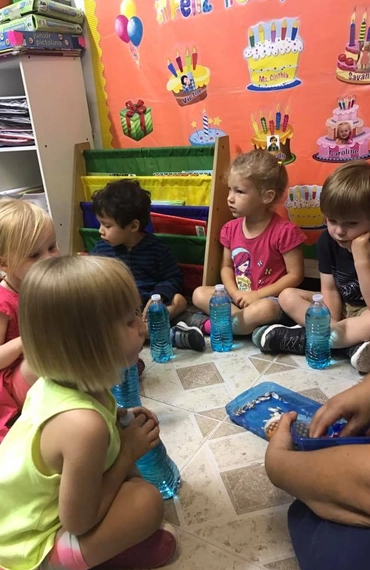
INIC Preschool's Social Emotional Readiness Program Produces Reliable Results

  • Emotional Intelligence, including empathy and self-awareness, can be achieved when children understand their own feelings. They also learn to be aware of classmates’ feelings, fostering a supportive and emotionally intelligent environment. .
  • Social Intelligence can result from disciplinary situations that involve more than one child. By learning to self-regulate and understand others’ feelings, kids can build better relationships. Social cognition is an essential concept at INIC—learning how to foster positive relationships. .
  1. Kids learn positive ways to handle difficult situations and feelings, rather than just learning what not to do.
  2. Conflict Resolution is learned in a safe and supportive environment, resulting in a strong community and one-on-one relationships.
  3. Sharing is learned by observing teachers and classmates, receiving guidance, and practicing during playtime. Positive reinforcement helps kids understand the importance and benefits of sharing.
  4. Leadership Skills boost independence, teamwork, self-confidence, and a sense of belonging. The Helper of the Day and Give Me Five programs provide leadership opportunities.
  5. Self Confidence Grows when kids can handle difficult situations. The program promotes practices that support children’s social and emotional development while encouraging a positive approach to self-discovery.
  6. Friendship is priceless as children develop the foundation for healthy relationships and true friendship that will last a lifetime.
INIC

How Social Emotional Learning Happens

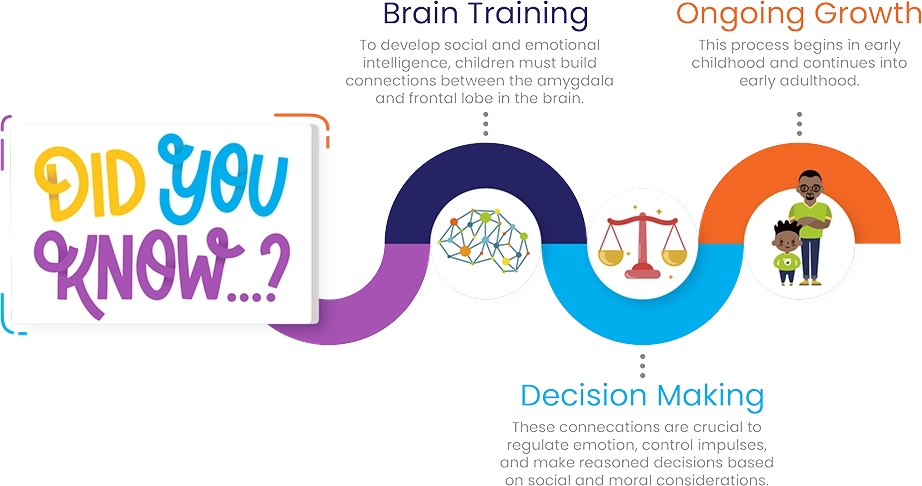
At INIC, we boost social-emotional growth by nurturing connections between the amygdala and the frontal lobe in the brain.

This innovative approach helps your child develop emotional maturity in a fun, safe, and supportive environment.

INIC - How it Happen

FAQs

Everything You Need to Know About Social-Emotional Learning at INIC
Why is social-emotional learning important for my child?
Social-emotional learning (SEL) helps children develop essential skills like empathy, self-regulation, and communication. These skills are critical for building positive relationships, succeeding in school, and navigating life’s challenges.
At INIC, we nurture emotional intelligence by teaching children to recognize, understand, and manage their feelings. Through activities, discussions, and role-playing, children learn to manage their emotions healthily.
The Emotion Wheel is a tool used at INIC to help children identify and understand their emotions. It shows facial expressions that correspond with different feelings, empowering kids to express themselves appropriately and manage their emotions.

INIC promotes positive behaviors through praise, reinforcement, and logical consequences. Our approach encourages self-regulation and helps children understand the impact of their actions on others and themselves.

Parents play a crucial role by reinforcing the concepts taught at school. INIC encourages open communication between parents and teachers and provides tools and strategies to support social-emotional growth at home.

How does Positive Discipline work at INIC?

Positive Discipline focuses on teaching children appropriate behavior through understanding and emotional learning, rather than punishment. It helps children develop self-regulation, resolve conflicts, and build a positive attitude towards learning.

Yes! At INIC, every child is supported at their own pace. Our nurturing environment, alongside our tools like the Emotion Wheel and Purposeful Play, helps children gradually build emotional awareness and self-regulation skills.

The “Helper of the Day” program gives children the opportunity to contribute to their classroom community by taking on a leadership role. This helps them develop a sense of responsibility, kindness, and positive peer interactions.
INIC uses structured activities and discussions to teach children conflict resolution skills. By learning how to express their feelings, listen to others, and find solutions, children become more adept at resolving conflicts in positive ways.
The skills developed through social-emotional learning, such as empathy, self-regulation, and problem-solving, serve children throughout their lives. These abilities are crucial for academic success, healthy relationships, and emotional well-being as they grow older.
Call Now Button