Spanish Immersion Preschool Benefits: How Daily Spanish with Mandarin Enrichment Builds Confident, Curious Learners

A clear, research-guided look at what bilingual classrooms add from ages 0–5—stronger communication, flexible thinking, and social-emotional growth that lasts.

Why Immersion Works in the Earliest Years

Daily Spanish, twice-weekly Mandarin, and research-guided routines turn curiosity into lasting skills.
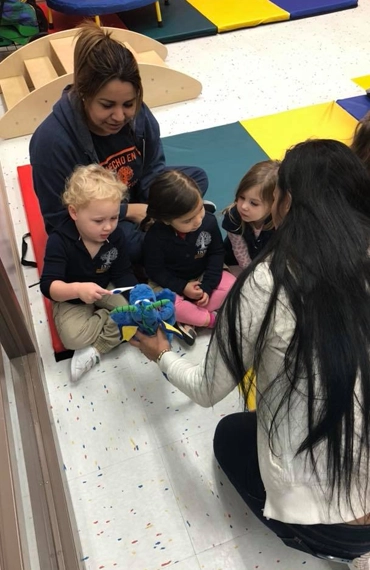
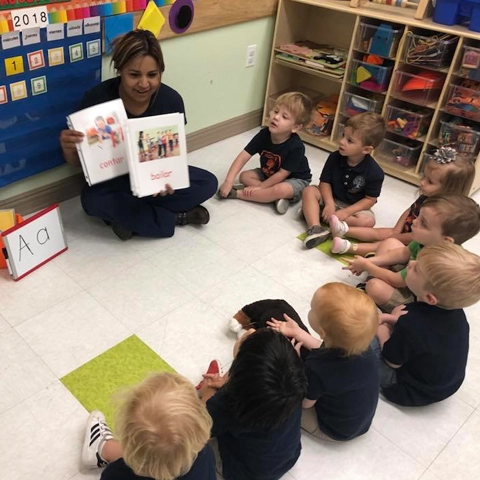
In a language immersion preschool in Austin, TX, children hear and use Spanish all day, practicing real conversation during play, projects, and routines. The benefits of bilingual preschool include stronger attention, memory, and communication that carry into kindergarten.
100% Spanish Immersion

100% Spanish Immersion

(plus interactive Mandarin Chinese)

Research from leading early childhood experts shows that bilingual children develop stronger math, reading, emotional, and analytical skills.

Most students begin at INIC speaking only English. Through daily Spanish immersion and age-appropriate Mandarin enrichment, they gain confidence, expand their vocabulary, and become bilingual learners.

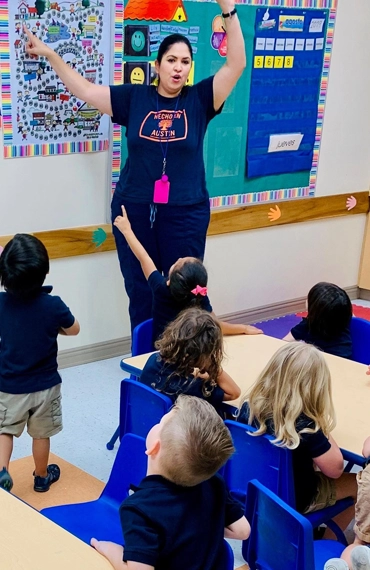
Experience the Magic of Language Immersion Firsthand

Take a tour, meet our passionate teachers, and see how Spanish and Mandarin come alive through all-day learning and thoughtfully designed routines.

How INIC Immersion Is Different From Typical Bilingual Programs

  • INIC Preschool is true, daily Spanish immersion for every age group.
  • Every core class and routine is led in Spanish, every day, 100%.
  • Teachers are native or near-native Spanish speakers with strong early childhood training.
  • Interactive Mandarin enrichment with a specialist takes place twice each week.
  • A full, research-based curriculum guides learning from infants through our kinder prep scholars.

Book a Tour Online to See Why Families Choose 100% Spanish Immersion

Visit a live classroom, meet our teachers, and watch Spanish and Mandarin come to life in everyday routines.

Do you know what a foreign accent is? A sign of bravery.

Amy Chua

The Evidence

Decades of research in early childhood education show that immersion learners build stronger cognitive, academic, and social-emotional skills

U.S. Department of Education:

Research shows that young bilingual learners gain meaningful advantages over monolingual peers

  • Stronger understanding of math concepts and early problem-solving
  • More advanced thinking and reasoning skills
  • Improved focus, memory, and decision-making
  • Additional bilingual benefits can be explored here
The DOE also highlights significant long-term advantages for bilingual children
  • Babies raised in bilingual environments show stronger self-regulation, a key predictor of academic success
  • Bilingualism supports deep connections with family, culture, and community
U.S. Department of Education:
Developing strong thinking skills

U.T. Austin & Cornell University Research

New 2022 research by Maria Arredondo, Ph.D., at the University of Texas at Austin found that infants and toddlers in language-immersion environments develop stronger learning skills than peers in monolingual settings.

The UT Austin study followed babies ages 6 to 10 months and showed that infants exposed to two languages demonstrated stronger attention, more flexible thinking, and improved learning readiness.
  • Bilingual infants switch between tasks more easily, block distractions, and sustain attention for longer periods
Research from Dr. Barbara Lust at Cornell University’s Language Acquisition Lab also confirms ” meaningful cognitive and social gains for bilingual children. “
  • Cognitive advantages gained through bilingualism can support a child’s long-term academic success
  • Social advantages grow as children communicate across languages and cultures in ways monolingual children cannot

Michigan State University:

Between birth and age 3, children’s brains are especially ready to absorb a second language, unlocking powerful benefits.

During these early years, the brain rapidly builds connections that support sound awareness, attention, and memory. When young children regularly hear and use more than one language, those connections become even stronger and more flexible.
  • Infants can notice changes in language as early as 6 months of age
  • Young children can acquire a second language very naturally through everyday interaction and play
  • Learning an additional language does not weaken or delay development in their first language
Michigan State University:

Myth Busted:

BILINGUALISM does not cause language delays or confusion
Arredondo said some parents think teaching kids multiple languages will impede their development, but she hopes increased awareness will change that.
Excerpt from The Daily Texan article
Mascot
“There are no delays in hitting those marks like when they produce the first language, when they produce the first word.”
Maria M Arredondo has a Ph.D. in Developmental Psychology. At the University of Texas at Austin, she is assistant professor with the Department of Human Development and Family Sciences, Department of Psychology
“The idea that two languages causes language delays in children has been a long-standing myth in the United States. However, research has dispelled this myth. Children are able to learn two languages at the same pace as other children who are learning only one language.”
Meagan Horn, MA, CCC-SLP, bilingual speech language pathologist at Nationwide Children’s Hospital
“Although some parents and educators may have concerns about the potential for confusion, bilingual children do not suffer language confusion, language delay, or cognitive deficit.”
Dr. Barbara Lust at Cornell University’s Language Acquisition Lab & Dr. Sujin Yang, former Post-Doctoral Research Associate at the Cornell Language Acquisition Lab
Action Packed!

Curious What Your Little Scholar is Up To All Day?

Click below to see their busy days.

How to Raise a Bilingual Child

According to researchers such as Dr. Lust, the key is to surround children early and often with rich experiences in more than one language:
  • Surround your child with as much rich conversation and language play as possible, beginning at birth.
  • Read and tell stories in both languages, even if your accent is not perfect.
  • Do not worry about strict “one person, one language” rules; children can sort out languages on their own.
  • Let your child hear more than one language in everyday conversations and social groups, the earlier the better.
  • Remember that children learn not only from what you say directly to them, but also from the language they overhear around them.
How to Raise a Bilingual Child

Frequently Asked Questions

Common questions families ask about 100% Spanish immersion and Mandarin enrichment at INIC.

Will my child get confused learning Spanish if we speak English at home?
No. Research and classroom experience show that children can keep languages separate and meet milestones on time. They naturally sort out when to use each language, especially when routines are clear and consistent.
Core instruction, routines, and classroom conversations are led in Spanish throughout the day. English appears mainly in songs, book titles, or brief clarifications, so Spanish remains the primary language of learning.
Understanding comes first. Most children begin to follow simple directions and classroom routines in Spanish within a few weeks. Spoken Spanish usually emerges gradually through songs, repeated phrases, and small-group work.

Teachers use gentle modeling, visuals, and predictable routines to help quiet children feel safe. Participation can start with gestures, choices, and one-word responses, then grows into complete sentences as confidence builds.

Evidence from immersion programs shows that children often match or exceed peers in English literacy by the early elementary years. Strong language foundations in Spanish transfer to English once formal reading instruction begins.

How does Mandarin enrichment fit into the day?
Mandarin is taught in short, lively sessions a couple of times per week by a specialist. Children experience songs, poems, and simple vocabulary, which support flexible thinking and cultural awareness without overwhelming them.
Yes. Many INIC students start with no Spanish background. Teachers design activities so newcomers can follow along through pictures, gestures, and peer modeling while they build vocabulary.
Family communication, conferences, and written updates are available in English. We also provide simple phrases, song titles, and ideas so caregivers can support immersion at home in ways that feel comfortable.
In many cases, yes, although each situation is considered individually. We collaborate with families and external specialists and focus on clear routines, rich oral language, and close observation of each child’s progress.
Bilingual children often show stronger attention, problem-solving, and social skills. They can connect with more people, access more literature and media, and view the world through more than one cultural lens.
Call Now Button